Introduction:
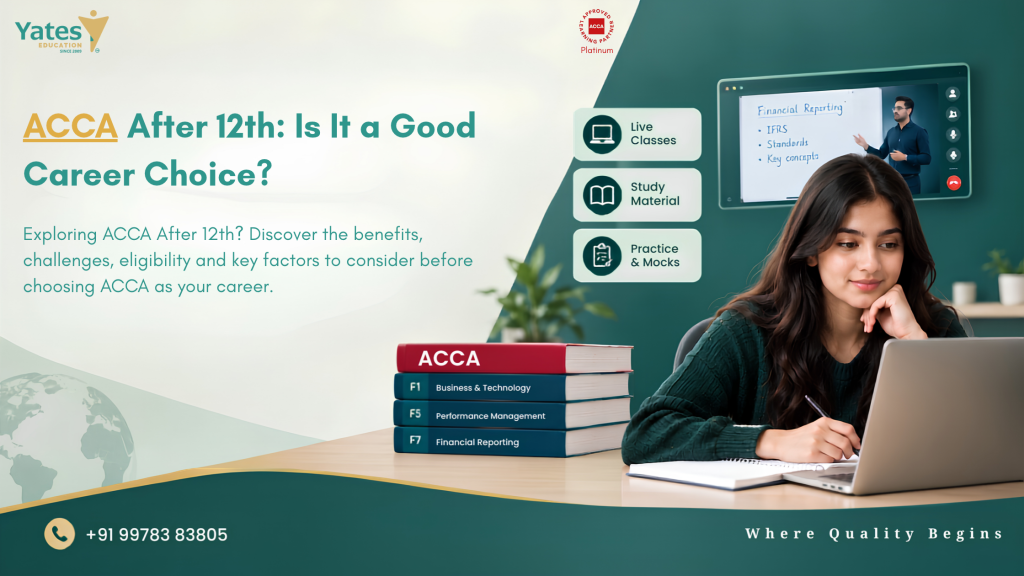
Choosing what to do after 12th commerce is an important decision for students, with options ranging from Traditional degrees such as B.Com and BBA to professional qualifications in accounting, finance and business. Each path offers a different way to build knowledge and prepare for a career, so the right choice depends on what a student wants to pursue in the future Among these options, ACCA after 12th is a path that students interested in accounting and finance may come across while exploring their options after school. But what does choosing ACCA at this stage actually mean, and what makes it different from the other choices available after 12th? Let us find out.
The Benefits of Starting Early:
Choosing ACCA after 12th instead of waiting until after graduation can offer students a few practical advantages:
- Time saved: Students can begin professional-level study without waiting to complete a three-year degree first, allowing them to start working towards a professional qualification earlier.
- Stronger foundation: Concepts from Class 11 and 12 Accountancy can provide useful background for some of the early ACCA papers, making the transition into professional-level studies more familiar.
- Global opportunities: ACCA’s international recognition can be useful for students who may want to build a career in India or explore opportunities in other countries later.
- Earlier career exposure: Starting a professional qualification earlier can give students an opportunity to explore internships, entry-level roles and practical work experience while they are still completing their studies.
- Development of broader skills: Alongside technical accounting knowledge, ACCA also involves areas that help students develop skills such as analytical thinking, professional judgement and understanding of ethics.
Starting early is not simply about finishing a qualification sooner. It can also give students more time to gain practical experience, explore different areas of accounting and finance, and make informed decisions about the direction they want their career to take.
Common Myths About Starting ACCA After 12th
There’s a fair amount of misinformation floating around that stops students from even considering this path seriously. Here are a few myths worth clearing up:
- “You need a degree before you can start” – This isn’t true. Students can register and begin their first papers straight after 12th, well before any graduation degree is required.
- “It’s only for exceptionally brilliant students” – ACCA rewards consistency and structured effort far more than raw brilliance. Students with an average academic record often do just as well when they study steadily and use the right guidance.
- “ACCA Is the Easier Alternative to CA” – ACCA is a challenging professional qualification with the same level of difficulty as CA. It requires a strong understanding of concepts, consistent preparation, and dedication. The difficulty experienced ultimately depends on an individual’s learning style, preparation, and understanding of the subjects.
- “It’s not valued in India” – With multinational companies, Big 4 firms, and global shared-service centres expanding rapidly across Indian cities, ACCA-qualified professionals are increasingly sought after within India itself, not just abroad.
- “You can’t combine it with a regular degree” – In reality, plenty of universities and colleges allow students to pursue ACCA alongside a B.Com or similar degree, letting them graduate with both a degree and a professional qualification.
Clearing up these misconceptions often makes the decision feel far less intimidating than it initially seems.
What Students Should Consider
Before choosing ACCA after 12th, students should consider a few important factors to understand whether the course suits their interests, learning style and future plans.
– Career Clarity: ACCA is suited to students interested in accounting, auditing, taxation or finance. Understanding these fields can help students decide whether they align with their interests and career goals.
– Study Style: ACCA follows a paper-wise exam structure and requires regular, independent preparation. Students who can maintain a consistent study routine may find it easier to manage the course.
– Balancing Dual Academic Commitments: Pursuing a professional qualification alongside a traditional degree like Bcom requires effective time management, structured planning, and a realistic timetable to maintain a balance between both academic commitments without feeling overwhelmed.
– Exam Planning: With four exam sessions available each year, students can decide how many papers to attempt at a time. A steady, well-planned approach is often more manageable than rushing through multiple papers.
– Learning Support: Students should consider the kind of support they may need, such as structured guidance, regular doubt-solving sessions and a clear paper-wise study plan to stay on track.
So, Is It Worth It?
For students who are genuinely drawn to finance and comfortable with a self-paced, structured way of studying, ACCA after 12th can be a smart, time-efficient choice with strong long-term career value. The decision ultimately comes down to two things: clarity about the career path, and having the right guidance to stay consistent through it.
Students and parents evaluating ACCA after 12th should take the time to understand what the course truly involves before committing. And when it comes to staying consistent through that journey, the right support matters which is where Yates Education comes in, offering structured classes and experienced guidance to help students build a strong start from their very first paper.